
The brief
Beth prints botanicals onto secondhand garments with sunlight, the way cyanotypes have been made since the 1840s. Each piece is unrepeatable, which is the whole appeal and the whole problem: a store has to show off one-of-ones like a gallery, release them in small drops, and handle the moment two people want the same shirt. She also needed to list pieces, mark them sold and see orders herself, from her phone, without touching code or paying a monthly platform fee.
What got built
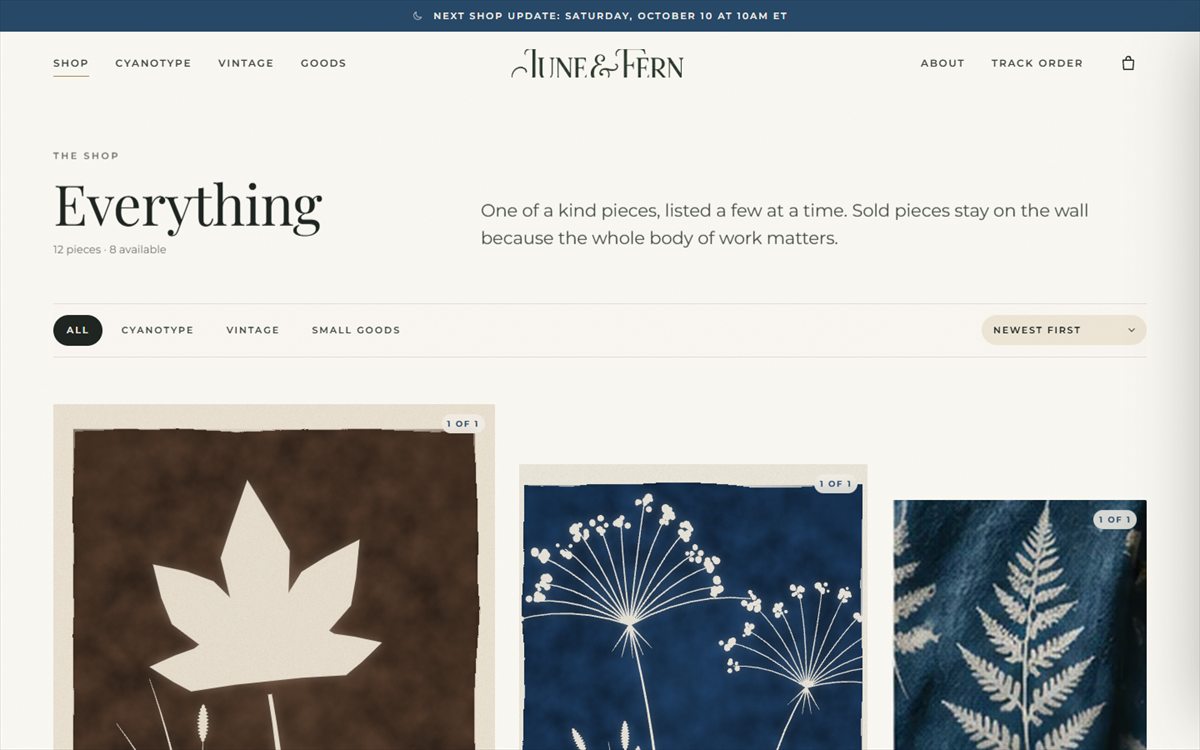
- A storefront that develops like a print. On the first visit the page blooms from white to Prussian blue with botanical negatives, the way a cyanotype develops, then settles into the hero. The ferns and wildflowers are drawn in code and sway gently. It plays once per visit and stays still for anyone who prefers reduced motion.
- Checkout that respects one-of-ones. Starting checkout holds the piece for 30 minutes. Paying marks it sold. Walking away releases it for the next person. Two shoppers can never buy the same shirt.
- Sold pieces stay on the wall. Like a gallery, sold work stays visible with a Sold stamp, because the body of work is what sells the next piece.
- A studio Beth runs herself. A password-protected admin for adding pieces with photos, editing, marking sold, and working through orders. No code, no plugins.
- Stripe checkout and order tracking. Payments go through Stripe Checkout, and customers look up their order with the order number and their email.
- Built to run on Cloudflare's free tier. Static pages, a few small server functions, a database and photo storage, for roughly the cost of the domain. No monthly store subscription.
The project manager part
The hard part of a one-of-one shop isn't the design. It's the edge cases: two shoppers and one shirt, an abandoned checkout, a refund, a piece that sold at a market an hour ago. Those were written down as rules before any styling, then checked with an automated end-to-end run that plays a shopper and the studio side by side: browse, reserve, pay, see it sold, look up the order. The look came after the rules held.
Details that matter
- Colors and logo come straight from Beth's brand board: fern green, indigo, clay and linen, with Playfair Display and a hand-lettered script.
- A "next shop update" bar announces each drop, so followers know when to come back.
- The storefront preview is live today; checkout switches on with the first real shop drop.
Selling something handmade?
A store that looks like your work, handles the edge cases, and doesn't charge you a monthly platform fee for the privilege.